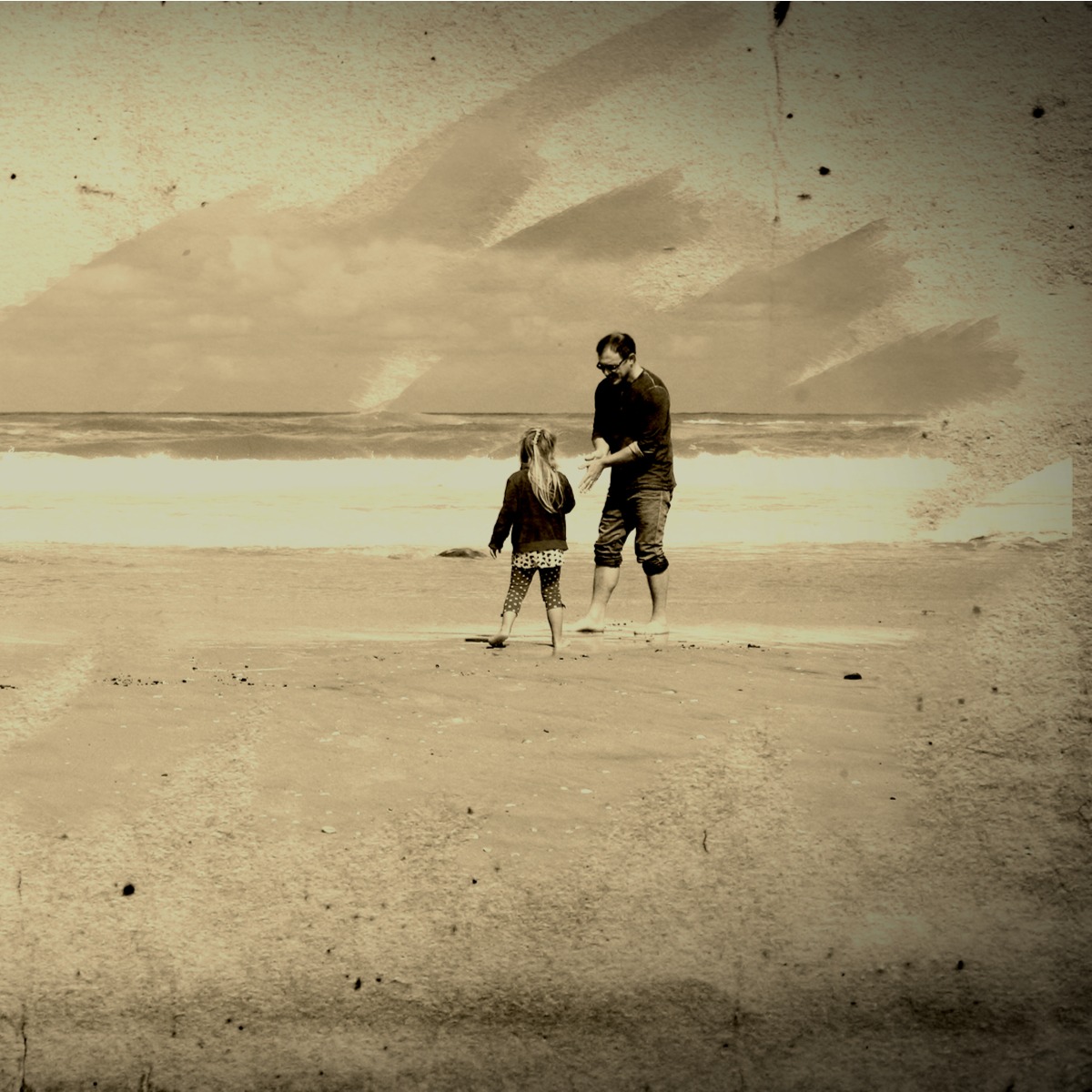
My poems are records of moments: impressions caught before they disappeared, emotions given shape, places and people immortalized. After writing across more than seven decades I’ve come to see that they are much more than that. My poems don’t simply preserve what happened or locate a perspective in time. They shape the relationship I now have with the person who once experienced what the poem captures.
An old poem is not an archive. An archive preserves an object so that it can be retrieved. A poem preserves a consciousness, or at least something of its essence: what mattered then, what frightened or attracted me, what I could see and what I could not yet see. When I return to such a poem years later, I’m not merely looking backward. I’m encountering an earlier self whose language has survived while the person who wrote it has continued to change.
That encounter can be awkward. The temptation is to improve the younger writer from the safety of age, smoothing an excess, explaining an ambiguity, replacing an old conviction with a newer one. But correction destroys the very thing that makes an old poem valuable. The earlier self shouldn’t be made to speak with the present self's knowledge. He should be allowed his incompleteness. The distance between what I knew then and what I know now is part of the poem's meaning.
Poetry behaves differently from memoir. Memoir often seeks continuity, looking back from a later vantage point to explore how one life became another. A poem however can leave contradictions unresolved and allow the emotional truth of a moment to stand even when the older writer would describe the event differently. The poem needn’t reconcile the selves. It can let them remain in conversation.
In "Paths," from Imperfect Offerings: Passages, I wrote, "Change is where I dream, / Permanence where I reside." The poem imagines "the routes of innumerable paths" and the ones not taken. Read when it was written, those lines belonged to a particular stage of my life and its uncertainty. Read now, they acquire another dimension. I know something about which paths were taken, which possibilities disappeared, and which destinations proved temporary. The poem has not changed, but my perspective in relation to it has. What was once anticipation has become memory, and yet the earlier uncertainty remains intact inside the lines.
I’ve become wary of treating a long body of poetry merely as a chronology. Chronology tells us when the poem was written. It does not tell us what happens when the poet meets it again. Across the volumes of Imperfect Offerings, my poems have become something closer to a record of consciousness. The record is imperfect, selective and sometimes contradictory, as consciousness itself is. Its value lies partly in those discontinuities. They don’t reveal a stable self moving neatly through time, but a succession of selves carrying traces of one another.
The poems on technology complicate the relationship further. Poems like "Homo digitus," "Mission Critical," "Discovery," "Evolve" and "Slipstream" came from earlier encounters with digitization, corporate systems and the growing influence of machine culture. I read them now from inside an AI age that has made some of their anxieties more immediate while making other assumptions look dated. I do not regard that distance as a defect. A poem on technology written before the flood of artificial intelligence does not become obsolete because the technology changed. It becomes evidence of how the future looked before it arrived. All possible futures are contained in the present.
This is the difference between poetry and much nonfiction. A factual argument about artificial intelligence may age rapidly because the technology is constantly evolving. A poem is not making the same contract with the reader. Its truth may depend less on whether it predicted the next phase of the technology correctly than on whether it captured the human feeling of approaching change: attraction mixed with unease, the fear of displacement, the disorientation of entering a world where the old vocabulary no longer seems adequate. The machine changes. The human encounter with change remains in the poem.
Memory works in a similar way. We sometimes speak of remembering as though the mind retrieves an intact scene from storage. In experience, memory is more restless. The present keeps entering it. A loss remembered at thirty is not the same loss remembered at seventy; the event is unchanged, but the life surrounding it has widened. Poems make that instability visible because the original language remains fixed while the reader does not. When the reader is also the poet, rereading becomes an encounter between two versions of consciousness occupying the same words.
There’s a danger in romanticizing this. Age doesn’t automatically confer wisdom, and the later self isn’t necessarily the better interpreter. Sometimes the old poem exposes something the present self has forgotten or rationalized away. A younger voice may be naive, but it can also be less guarded. The poem can reverse the usual authority of retrospection. Instead of the older writer explaining the younger one, the younger writer may ask what the older one has lost.
This changes how I think about the poetry gathered on my literary retrofuture website. My early poems, my later poems on the impact of climate change and machine intelligence, and the essays I’m now writing aren’t simply separate shelves of material. They form a temporal field. A reader can move across decades and watch the subjects change, but also watch the observing self change with them. Memory gives way to anticipation; anticipation becomes history; old metaphors return under new conditions. The work is connected by the persistence of questions as both the world and the person asking them alter.
The phrase I’ve used for my poetry -- "timeless poems reflecting the moments that made them" – is precise. Timelessness doesn’t mean that a poem escapes its historical moment. Quite the opposite: the moment must remain present enough to be felt. My poems enable a later consciousness to approach an earlier one without pretending that the years between them can be erased.
This is what a lifetime of poems becomes. Not a diary in verse, not a monument to a single continuous identity, but a series of places and times where different selves can still meet. The self who wrote a poem in a past life is gone in the ordinary sense: changed by experience, age and the accumulation of my experiences with other lives in my life. But the essence of my former selves remains in the language. Sometimes I’m embarrassed by the youthful naivety, occasionally I’m surprised by new discoveries from the perspective of my older self, but I always recognize the honesty, the passion, the intensity. My poems become immortal.